![[personal profile]](https://www.dreamwidth.org/img/silk/identity/user.png)
A Reprise of the Knitting Bug
Jan. 10th, 2009 09:06 amWell, I am getting ready to deal with taking my GRE, start my MA program, potentially have a job transfer to a more remote campus site (with an added 1.5 hours of time in transit, but with a lot more pay), the start of my German II course and a new garden plot to work come Spring...
So, of COURSE it it time to start looking into a new hobby!
*grin*
Seriously though, I am back in my 'learning to knit' phase: I really want to be able to make my own socks (thanks Jas Townsend, but I really *can* do this myself) and I have a number of Schlapes that I a dieing to try as knit/felted rather than cut/sewn projects.
I have a terrific local yarn shop, owned by a friend no less. She is an SCA Barronness and I am convinved that she would be more than willing to assist in my insanity, if only I can come up with some knitting patterns that I want to try. She may well *have* patterns already for all I know. *chuckle*
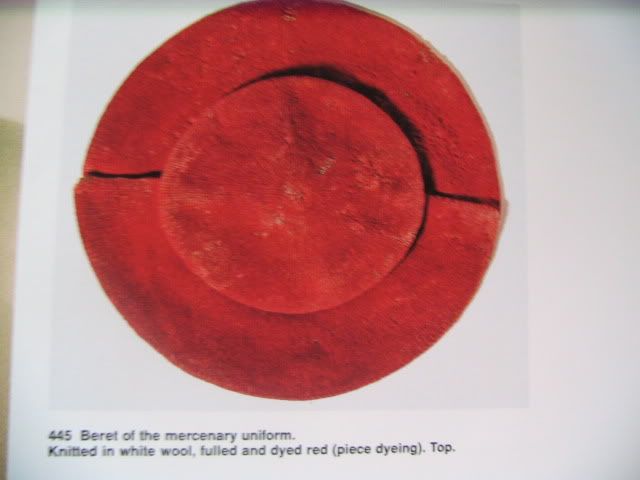
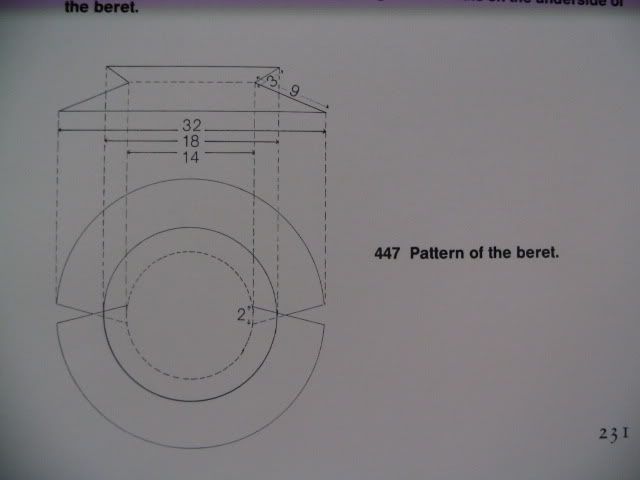
In the meantime, I am going to start compiling some information on knit clothing from the 16th C period. Of course, German sources are preferred (since I hate having to use British sources to justify my clothing - I know they were neighbors, but they didn't all wear the same stuff at the same time). I know of a number of extant hats and that lovely pair of pants currently. Anyone have any 16th C extant knit socks they'd like to share as well?
Some general Google sources on socks:
http://www.faucet.net/costume/research/hose.html - sock history with some inventory listings
http://www.sskip.net/sca/knitting/stockings/ - reconstruction based on various grave finds
http://www.florilegium.org/files/CLOTHING/Knit-Stockngs-art.text - knitting pattern and instructions
So, of COURSE it it time to start looking into a new hobby!
*grin*
Seriously though, I am back in my 'learning to knit' phase: I really want to be able to make my own socks (thanks Jas Townsend, but I really *can* do this myself) and I have a number of Schlapes that I a dieing to try as knit/felted rather than cut/sewn projects.
I have a terrific local yarn shop, owned by a friend no less. She is an SCA Barronness and I am convinved that she would be more than willing to assist in my insanity, if only I can come up with some knitting patterns that I want to try. She may well *have* patterns already for all I know. *chuckle*
In the meantime, I am going to start compiling some information on knit clothing from the 16th C period. Of course, German sources are preferred (since I hate having to use British sources to justify my clothing - I know they were neighbors, but they didn't all wear the same stuff at the same time). I know of a number of extant hats and that lovely pair of pants currently. Anyone have any 16th C extant knit socks they'd like to share as well?
Some general Google sources on socks:
http://www.faucet.net/costume/research/hose.html - sock history with some inventory listings
http://www.sskip.net/sca/knitting/stockings/ - reconstruction based on various grave finds
http://www.florilegium.org/files/CLOTHING/Knit-Stockngs-art.text - knitting pattern and instructions

![[livejournal.com profile]](https://www.dreamwidth.org/img/external/lj-userinfo.gif)